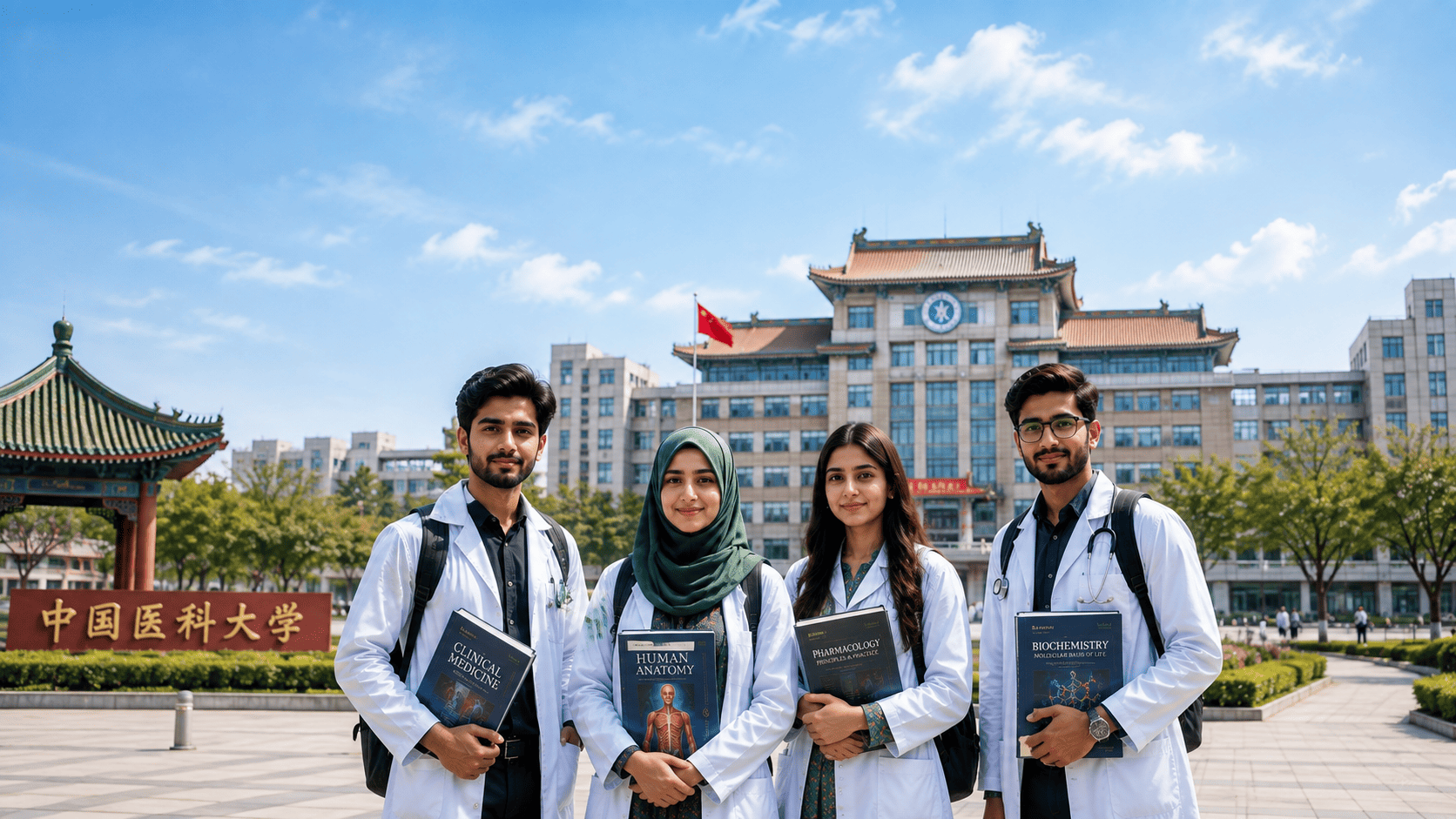
This question comes up in almost every group chat, every consultant meeting, and every family discussion once MDCAT results are out and a government seat doesn’t materialize. And honestly, it’s a fair question to ask seriously rather than just going along with whatever a nearby consultant’s office tells you. So let’s actually break down what “worth it” means in 2026, based on how the system currently works, not just marketing lines.
The Case For It
Start with the obvious one: cost. Private medical colleges in Pakistan now charge anywhere from roughly 80 lakh to over 1.5 crore rupees for a full MBBS degree, and PMDC’s fee cap still allows private colleges to charge up to 1.8 million rupees a year, with some institutions exempt from that cap entirely. MBBS in China, by comparison, typically costs somewhere between 8 and 18 lakh rupees a year including tuition and hostel, depending on the university and whether it’s an English medium or bilingual program. Over five to six years, that gap adds up to a significant amount of money for most middle class families, and this alone is why the majority of Pakistani students exploring China are doing so.
Admission is also genuinely less brutal. Government medical colleges in Pakistan require aggregates in the low 90s, built from Matric, FSc, and MDCAT combined, and that level of competition pushes a lot of capable students out simply due to marginal differences in score. Most Chinese universities don’t require MDCAT at all, generally asking for around 60 percent in FSc pre-medical subjects instead. A small number of top ranked Chinese universities have introduced their own entrance exam, called CSCA, starting from the September 2026 intake, but plenty of solid mid tier universities still don’t require it, so the door remains fairly open for average to good students who didn’t crack MDCAT’s ceiling.
Infrastructure is another real advantage. A number of Chinese medical universities listed by MOE boast of their modern hospitals, simulation centers, high-tech classrooms and a case-based, problem-solving approach to learning compared to the traditional didactic methodology used widely in Pakistan. Campuses are generally safe and disciplined, with international student desks, availability of halal food and a settled Pakistani student community easing the transition dramatically.
The Part Everyone Actually Worries About: Will You Actually Practice in Pakistan
This is the honest core of the “worth it” question, and it deserves a straight answer rather than either blind reassurance or unnecessary fear.
Yes, you can absolutely come back to Pakistan and practice medicine after MBBS in China, provided you do a few things correctly. Your university needs to be currently recognized by PMDC and listed on WDOMS. You need to complete a proper mandatory internship. And you need to clear the National Licensing Examination (NLE), which every foreign MBBS graduate must pass regardless of which country they studied in, China included.
Some industry sources claim China has a comparatively strong NLE pass rate among popular MBBS abroad destinations, occasionally citing figures around 80 percent, though it’s worth treating numbers like this with some caution since they usually come from education consultancy websites rather than an independently published PMDC dataset. What’s more reliably reported, including by sources that specifically dig into NLE outcomes, is that failure tends to correlate with specific preventable issues rather than with China itself as a study destination. Students who struggle with the NLE are usually the ones who studied at weaker non-MOE universities with limited clinical exposure, didn’t prepare specifically for Pakistan’s exam pattern, or treated their Chinese language requirements and clinical rotations casually instead of seriously. Students who picked recognized English medium universities, received adequate hands on clinical training, and started preparing themselves for NLE earlier with Pakistan specific resources tend to perform better. In other words, it is what you do during your degree and not the country you studied in that matters.
The Genuine Downsides Worth Weighing
To be fair to the other side of this question, there are real trade offs.
Recognition isn’t automatic the way it is with a Pakistani government degree, and this is where fake or careless consultants cause the most damage. Some agents push students toward unrecognized or borderline universities using vague promises, and the student only discovers the problem years later when applying for the NLE and finding their university isn’t on PMDC’s current list. This is entirely avoidable by verifying recognition status yourself directly through PMDC, but it does mean the responsibility is on you, not automatically guaranteed by simply “studying MBBS in China.”
Language is a real factor too. Non-MOE bilingual universities require passing HSK Chinese proficiency levels at various stages, and even fully English medium MOE universities expect a working level of Mandarin by the time you reach clinical years and start interacting with actual patients. If you’re not willing to put in consistent effort here, your clinical training experience can genuinely suffer.
Being away from family for five to six years is also a bigger adjustment than people expect going in. Homesickness during the first year is normal, but it’s also normal to get used to it after about a year, so just be prepared that you might have to deal with extended periods of time away from home before you decide to do this.
So, Is It Actually Worth It?
If you couldn’t secure a government medical seat in Pakistan and your only local alternative is an expensive private college, MBBS in China is a genuinely reasonable and often financially smarter choice for 2026, provided you approach it properly. That means choosing a PMDC recognized, ideally MOE listed university rather than picking based on whoever offers the lowest fee or fastest admission. It means taking Chinese language requirements seriously from day one instead of treating them as a formality. And it means starting NLE preparation well before your final year rather than assuming a Chinese degree alone guarantees a Pakistani medical license.
It is not automatically “worth it” if you go in blindly, trust the first consultant who messages you on WhatsApp, and skip the actual verification steps that protect your future license. The degree itself is credible. The risk lives entirely in the decisions made around it, the university you pick, the effort you put into language and clinical training, and how seriously you prepare for the exam that actually determines whether you’ll practice in Pakistan.
For a capable, motivated student willing to do the groundwork properly, MBBS in China in 2026 remains one of the more practical and financially sensible paths to becoming a doctor. Just don’t let the affordability and easier admission process trick you into skipping the homework that actually protects your future career.
This is a helpful overview for students considering medical education abroad. Comparing tuition fees, eligibility, university recognition, and admission requirements before choosing an MBBS program is definitely important. The information about studying MBBS in China is especially useful for international students.