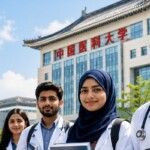
Every year thousands of Pakistani students aspire to become doctors. They face disappointments regarding the MDCAT results, very few government seats are made available each year, and private medical college fees in Pakistan are expensive and unaffordable for most families. So China becomes the obvious next option: genuinely good universities, lower cost compared to private Pakistani colleges, and a 5+1 year MBBS structure that sounds simple enough on paper.
And that’s exactly where the trouble starts. The moment a family starts googling “MBBS in China consultants Pakistan,” they’re flooded with hundreds of agencies, WhatsApp groups, Facebook pages, and “students currently studying in China” who are more than happy to guide them, for a fee, of course. Some of these are honest and genuinely helpful. A lot of them are not. And the students who get scammed usually don’t find out until year 3 or 4, when they try to register with PMDC and realize their degree isn’t even eligible.
This blog is about helping you tell the difference before you sign anything or transfer a single rupee.
Why This Problem Even Exists
Here’s the uncomfortable truth: China doesn’t have one unified “approved for Pakistan” list that every university follows. Pakistan’s local medical regulator called PMDC (Pakistan Medical and Dental Council, formerly known as Pakistan Medical Council for some time) keeps the list of the foreign universities from which they accept the degrees. Just because a Chinese university is legit and government-recognized in China does not automatically mean PMDC will accept your degree once you come back.
On top of that, there’s a second layer most students don’t know about. China’s own Ministry of Education (MOE) has its own listing system, and organizations like WDOMS (World Directory of Medical Schools) and WFME also matter for international recognition. A university can be real, operating, and even enrolling foreign students, and still not qualify for PMDC registration in Pakistan.
Fake or careless consultants exploit exactly this confusion. They know most 17 to 18 year olds applying, and their parents, don’t understand MOE vs non-MOE, or what WDOMS accreditation even means. So they promise “PMDC approved” universities that are actually borderline, outdated on the list, or straight up not recognized anymore.
Common Tricks Fake Consultants Use
1. Showing you an “acceptance letter” and calling it done
An acceptance letter or offer letter from a university means very little on its own. What actually matters for your visa is the JW202 form (or JW201 for scholarship students) issued by the Chinese government, alongside your visa notification letter. A consultant who can’t clearly explain this difference, or who rushes you to pay before showing you these documents, is a red flag.
2. Quoting a university name that “used to be” on the list
Some Chinese universities have been renamed, merged or re-branded over time. A consultant could quote you a name or a source that once was on the list but no longer is.
A consultant may show you an old PDF or blog post mentioning a university that used to be PMDC approved, but is no longer. Always check the university’s current official name, and cross-check it yourself on PMDC’s website, not on the consultant’s own webpage.
3. “Trust me, I have a batch going every year”
Consultants love using social proof: “we’ve sent 4,000+ students,” “we’re operating since 2001,” WhatsApp groups full of happy seniors. None of that verifies recognition status. A consultant can have sent thousands of students to a university that isn’t PMDC-recognized; volume of students placed says nothing about whether your degree will actually be valid when you come home.
4. Fake “current students” as influencers
This is newer and sneakier. Some pages are run by people pretending to be current MBBS students in China, casually reviewing universities and steering DMs toward a specific consultant or agent. Genuine students exist too, so don’t assume every one is fake, but don’t take a stranger’s Instagram story as your only source of verification either.
5. Downplaying the NLE, the licensing exam
Whatever university you go to, once you’re back in Pakistan you must clear the National Licensing Examination (NLE, previously known as NEB) to actually register with PMDC and practice. Some consultants gloss over this completely, letting students believe that finishing MBBS in China automatically makes them a licensed doctor in Pakistan. It doesn’t. Clinical exposure, curriculum differences, and English medium vs bilingual instruction all affect how prepared you’ll actually be for that exam.
How to Actually Verify a Consultant and a University
Don’t rely on the consultant’s own website for “PMDC approved” claims, that’s like asking a shopkeeper if their own product is genuine. Instead:
- Go directly to PMDC’s official website and look up the recognized foreign medical institutions list yourself. Screenshot or save the page with the university’s exact name on the date you checked it, since these lists do get updated.
- Check whether the university is MOE listed or not. MOE listed universities generally offer English medium MBBS and tend to have smoother recognition; non-MOE universities can still be PMDC approved but often use bilingual instruction, which matters for your day to day study experience.
- Ask the consultant to show you the JW202 form process, not just an acceptance letter. If they can’t explain how the visa documentation flow works, that’s a problem.
- Contact the university directly, if possible, using the email listed on the university’s own official website, not one given by the consultant, to confirm the consultant is actually an authorized representative.
- Search the consultant’s name and company registration. Legitimate agencies are usually registered businesses (SECP registered, for instance) and have a real, checkable office address, not just a WhatsApp number and an Instagram page.
- Be suspicious of pressure tactics. “Seats are closing today,” “pay the deposit right now to lock your spot,” real universities have defined intake periods (usually spring and fall), and one day rarely makes the difference a consultant claims it does.
- Talk to more than one source. Reach out to actual alumni through official university alumni groups if they exist, not just the seniors a consultant introduces you to.
A Quick Reality Check Before You Sign Anything
Ask yourself these questions before paying any consultant fee:
- Is this university currently on PMDC’s own list, checked by me, today, not last year, not on the consultant’s brochure?
- Do I understand whether it’s MOE listed or not, and what that means for the medium of instruction?
- Has the consultant clearly explained the NLE and what my responsibilities are after returning to Pakistan?
- Have I seen the actual JW202 form process explained, not just an acceptance letter?
- Does this consultant have a verifiable, registered office and a track record I can check independently, not just testimonials on their own page?
If you can’t confidently answer “yes” to most of these, slow down. This is a five or six year commitment and a huge financial decision for most families. A few extra weeks spent double checking is nothing compared to finding out at year 5 that your degree won’t let you sit the licensing exam back home.
Final Thought
Studying MBBS in China can genuinely be a great decision for a lot of Pakistani students. Plenty of doctors practicing in Pakistan today are Chinese MBBS graduates who did their homework properly before flying out. The degree itself isn’t the problem. The problem is the industry of consultants that has grown around it, where some players care more about your admission fee than your actual future license to practice medicine.
Take the time to verify everything yourself, directly from PMDC and from the university. Treat any consultant as a facilitator, not as the final authority on what’s “approved” or not. Your future medical license is worth those extra few Google searches and phone calls.