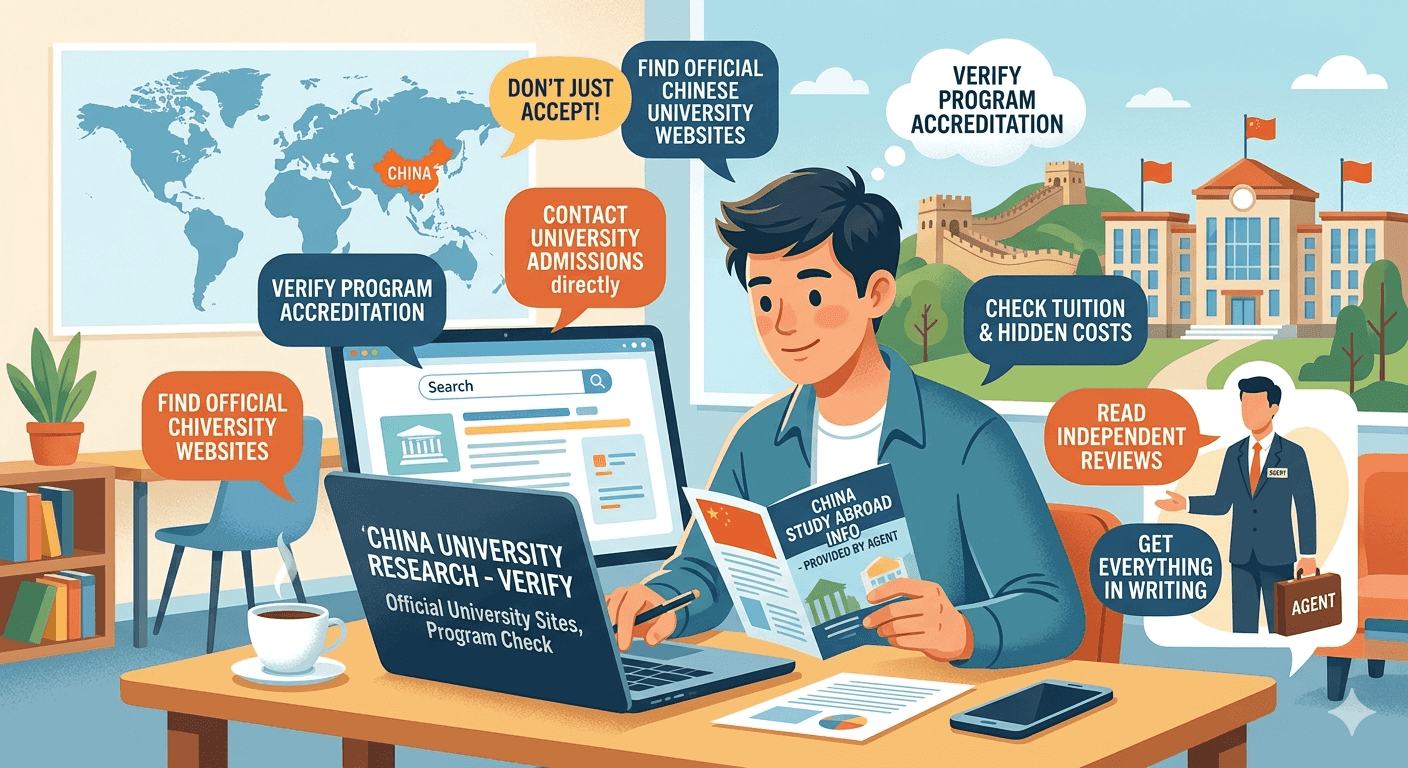
A lot of students want to study in China, those who want to be doctors. Students from Pakistan, India, Bangladesh and Africa often ask for help from admission agents to get into universities. Some agents are good. Really help students but others give wrong information or make promises they cannot keep.
If you find out that your admission agent has given you information about China universities or getting in you will probably feel worried and confused. You should not worry because you are not the only one this has happened to , and there are things you can do to make it right.
China universities and your future are important so you need to take care of this problem. This guide will tell you what to do if your admission agent gives you wrong information about China universities and it will also give you tips to avoid this problem in the future.
Understanding Admission Misguidance
Before you do anything you need to know what is meant by “misguidance” in this situation. People who help with admissions, like agents can give students the idea in different ways, such, as:
- Promising admission in top universities without real confirmation
- Providing fake university names or fake offer letters
- Hiding extra charges or hidden fees
- Providing incorrect information about tuition fees or scholarships
- Misleading about university ranking or recognition
- Not informing about language requirements or entrance exams
- Delaying your application on purpose is not an idea.
If you notice any of these problems you should do something about ignoring the problems.
Step 1: Stay Calm. Get All The Details
The first thing you need to do when this happens to your application is to stay calm and get all the details about the problems.
- If you start to panic it will not help your application.
- So you should get all the details about your application to the school.
- This will help you figure out what to do with your application.
The application is the important thing so you should get all the information about the application.
You should gather:
- WhatsApp chats or email conversations with the agent
- Payment receipts or bank transfers
- Admission letters or documents provided by the agent
- University name and course details promised to you
- Any contract or agreement signed with the agent
This information will help you see what is going on and do something about it if you need to.
Step 2: Check out the University for yourself
Many students trust agents blindly without checking university details. If you feel misled, immediately verify the university through official sources.
You can:
- Visit the official university website
- Check if the university is recognized by China’s Ministry of Education
- Look for the university in trusted international education databases
- Compare the tuition fees and the admission requirements.
For example ,if your agent talks about a university in China but you cannot find it on the internet or it does not have an official website the information might be fake or wrong.
You should always double-check by only listening to the agent.
Step 3: Contact the University
A good way to verify the information is to get in touch with the university by yourself and confirm the details directly with the university.
Most Chinese universities have
- Official email addresses for international students
- Admission offices
- International student support departments
You can send an email asking:
- Whether your admission application is received
- If your offer letter is genuine
- What the real admission requirements are
If the university confirms that your application does not exist or your offer letter is fake, then you know clearly that the agent has misled you.
Step 4: Stop Further Payments Immediately
If you think your admission agent is not honest, stop sending money. Many students make a mistake by keeping payments going hoping things will get better.. This usually means they lose even more money.
You should:
- Pause all transactions
- Avoid paying “processing fees” again
- Do not trust new promises without proof
Protecting your financial safety is very important at this stage.
Step 5: Report the Agent
If the agent has clearly misled you, you should report them. This step helps protect other students as well.
You can report them to:
- Local consumer protection authorities
- Education consultancy monitoring bodies
- Online complaint forums
- Social media groups for student awareness
If the agent is part of a company, also report to their official office or website.
In bad situations you might need to take legal action and this will depend on the laws in your country.
Step 6: Get in touch with the Chinese Embassy or Education Office
If you have a problem with your admission letters or issues with the visa you can get in touch with the Chinese Embassy or the Chinese consulate in your country. The Chinese Embassy or the Chinese Education Office can help you with the admission letters or the Chinese visa issues. You can contact the Chinese Embassy for help, with the visa or the Chinese admission letters.
The Chinese Embassy or Education Office can help you with the Chinese Embassy or Education Office issues.
- Verify your visa documents
- Check authenticity of admission letters
- Guide you on next steps for genuine applications
This step is really important if you have already applied for a student visa or got some documents.
Step 7: Ask for a Refund (If
If you paid money to a bad agent, try to ask them for your money back.
When asking for a refund:
- Be polite but firm
- Provide proof of misguidance
- Show receipts and agreements
- You should ask for written confirmation of your refund request.
Sometimes these agents will not give you a refund. If you have everything written down it will be easier to get your money back or get help from a lawyer.
Step 8 is about learning how to figure out if an agent’s fake or not.
After something like this happens you need to know how to stay away from it in the future.Lots of students get into trouble because they do not know what to watch out for.
Here are some things that should make you suspicious of agents:
- They guarantee that you will get into the universities one hundred percent.
- No official office or physical address
- Refusing to provide university contact details
- Asking for full payment in advance
- Poor or no online presence
- Fake testimonials or reviews
When you are looking for someone to help you always choose agents who’re transparent and verified.
Step 9: Apply Directly. Through Trusted Sources
If you want to stay out of trouble later on you can apply directly to Chinese universities or you can use trusted official education platforms, like the Chinese universities website. You should apply directly to universities or use trusted official education platforms to be safe.
Many universities in China allow direct applications for international students. This reduces dependency on agents and lowers the risk of fraud.
You can also:
- Attend official education fairs
- Contact university international offices
- Use verified scholarship portals
You have control over what happens with your admission.
Step 10: Share Your Experience to Help Students
If admission people misled you, your experience can help other students so they do not make the same mistake.
You can:
- Write reviews online
- Post in student groups
- Warn others on social media
- Leave feedback on education forums
This helps create awareness and reduces fake consultancy practices.
To Stop Admission Scams From Happening
It is always better to be safe than to have to deal with many problems. Admission scams are really bad. We should try to avoid them. Here are some simple tips to help you stay safe from these admission scams. Admission scams can be really bad. It is good to know how to prevent admission scams.
- Always verify university information independently
- Never trust verbal promises only
- Use official university websites
- Avoid agents who pressure you for quick payment
- Keep copies of all documents and messages
- Compare multiple consultants before choosing one
Being careful from the beginning saves time, money, and stress.
Final:
Getting into a university in China is a chance for students from other countries, especially for people who want to study medicine or engineering. Things can go wrong when you work with agents who are not trustworthy.
If the person who is helping you with your university admission gives you advice do not worry. First you should check if your university is real, get some proof, talk to people who work there and stop paying any money. Then you can take action by making a complaint or getting your money back if you need to.
The key thing is to learn from what happened. So you can make choices next time.
You can still study in China. Have a good time if you do things right. Studying in China can be safe and successful, for you if you are careful. China is a place to study and you can achieve your dream of studying in China.