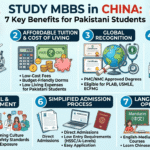

Pursuing an MBBS abroad has become a popular choice for students seeking high-quality medical education at an affordable cost. Among global destinations, China has emerged as one of the top choices for international students. With its modern infrastructure, world-class teaching hospitals, and recognized medical degrees, China offers excellent opportunities for students aiming to build a successful medical career.
If you are planning to study MBBS in China, it is crucial to choose a university that is approved by the MCI (Medical Council of India) and recognized by the WHO. This ensures that your degree will be valid internationally, and you can pursue further studies or practice medicine in your home country.
This blog provides a comprehensive guide to studying MBBS in China, including the list of MCI & WHO-approved universities, eligibility criteria, fees, benefits, and the application process.
Why Study MBBS in China?
China is rapidly becoming a leading destination for medical education due to several reasons:
1. Globally Recognized Degrees
Chinese medical universities are listed in the World Directory of Medical Schools (WDOMS) and are recognized by organizations like WHO, UNESCO, and national medical councils including the MCI/NMC in India. This ensures that students can practice medicine in different countries after completing the required licensing exams.
2. Affordable Tuition Fees
Compared to private medical colleges in India or universities in the USA and UK, tuition fees in China are much lower.
- Average tuition: $3,000–$5,000 per year
- Hostel & living costs: $100–$200 per month
- Total 5–6 year MBBS cost: $20,000–$35,000
This makes China a highly cost-effective destination for medical education.
3. English-Medium Programs
Most top medical universities in China offer English-taught MBBS programs for international students. This allows students to study medicine without needing to learn Chinese immediately. Some universities also provide Chinese language classes for communication with patients during clinical practice.
4. Modern Infrastructure & Clinical Training
Chinese universities provide:
- Well-equipped laboratories
- Advanced simulation centers
- Digital anatomy tools
- Large teaching hospitals for clinical exposure
Students gain hands-on experience from the early years of their MBBS program.
5. Safe and Student-Friendly Environment
China is known for its safe campuses and disciplined environment. Universities provide:
- Separate hostels for boys and girls
- Security and support staff
- Campus medical facilities
- International student communities
Eligibility Criteria to Study MBBS in China
To pursue MBBS in China, international students must meet the following requirements:
Academic Requirements
- Completion of 12th grade or equivalent
- Must have studied Physics, Chemistry, and Biology
- Minimum marks: 50–60% depending on the university
Age Requirement
- Minimum age: 17 years
- Maximum age: 25 years (varies by university)
Language Requirement
- English proficiency may be required in some universities
- IELTS/TOEFL may be accepted in some cases
Health & Character
- Medical fitness certificate
- Police clearance certificate (no criminal record)
NEET Requirement for Indian Students
- Indian students must qualify NEET to practice medicine in India after returning
- For other countries, NEET is generally not required
MCI & WHO-Approved Universities in China for MBBS
Here is a list of top medical universities in China approved by the MCI (India) and recognized by WHO:
1. Peking University Health Science Center
- Location: Beijing
- Established: 1912
- Recognized by: MCI, WHO
- Courses: MBBS in English
- Features: Modern hospitals, research facilities, strong international student support
2. Fudan University, Shanghai
- Location: Shanghai
- Recognized by: WHO, MCI
- Features: Advanced clinical training, international collaborations
3. Shanghai Jiao Tong University
- Location: Shanghai
- Recognized by: WHO, MCI
- Highlights: High-tech campus, modern hospitals, English-medium MBBS
4. Zhejiang University
- Location: Hangzhou
- Recognized by: MCI, WHO
- Features: State-of-the-art labs, international faculty, clinical rotations
5. Nanjing Medical University
- Location: Nanjing
- Recognized by: MCI, WHO
- Highlights: Affordable fees, English-medium programs, international recognition
6. Sun Yat-Sen University
- Location: Guangzhou
- Recognized by: WHO, MCI
- Features: Modern hospitals, research programs, global student community
7. Shandong University
- Location: Jinan
- Recognized by: MCI, WHO
- Highlights: English-medium MBBS, modern infrastructure
8. Tianjin Medical University
- Location: Tianjin
- Recognized by: MCI, WHO
- Features: Clinical exposure, advanced teaching methods
9. China Medical University (CMU)
- Location: Shenyang
- Recognized by: MCI, WHO
- Highlights: Affordable, English-medium MBBS, strong practical training
10. Jilin University
- Location: Changchun
- Recognized by: WHO, MCI
- Features: Large international student population, modern teaching hospitals
Other Notable MCI & WHO-Approved Universities
- Wenzhou Medical University
- Southern Medical University, Guangzhou
- Ningxia Medical University
- Hebei Medical University
- Xi’an Jiaotong University
Always confirm recognition status on WDOMS and your country’s medical council before applying.
Admission Documents Required for MBBS in China
Students need to prepare the following documents:
- Passport copy
- 10th and 12th mark sheets
- Passport-size photographs
- Police clearance certificate
- Medical fitness certificate
- Completed application form
- Bank statement (proof of funds)
- Visa documents (JW202 form for student visa)
Requirements may vary slightly between universities.
MBBS Fees in China (Approximate)
| Expense Type | Cost Range |
| Tuition Fees | $3,000 – $5,000/year |
| Hostel | $500 – $900/year |
| Food | $100 – $200/month |
| Insurance | $100 – $150/year |
| Books & Supplies | $200 – $300/year |
Total 5–6 Year Cost: Around $20,000–$35,000
Compared to private medical colleges in India or the US, this is highly affordable.
Step-by-Step Admission Process
Step 1: Choose a Recognized University
- Select a WHO & MCI-approved university
- Check if the university offers English-medium MBBS
Step 2: Submit Application & Documents
- Upload passport, mark sheets, photos, and other documents
Step 3: Receive Admission Letter
- University issues an official Offer Letter
Step 4: Pay Registration Fees
- Advance fee to confirm the seat
Step 5: Apply for JW202 Form
- Required for student visa (X1 visa)
Step 6: Apply for Chinese Student Visa
- Submit all documents to the Chinese Embassy
Step 7: Fly to China
- Join orientation and start MBBS classes
Benefits of Studying MBBS in China
- Globally recognized degree (WHO & MCI approved)
- Affordable tuition fees and living costs
- English-taught programs for international students
- Modern hospitals and practical training
- Safe and multicultural environment
- Opportunities to work globally after MBBS
Challenges to Consider
- Language barrier: Daily communication may require basic Chinese, especially during clinical rotations
- Climate adjustments: Cities may have extreme temperatures
- Distance from home: Staying away from family can be challenging
- NEET requirement for Indian students: Must qualify NEET to practice in India
Final Thoughts
Studying MBBS in China is an excellent opportunity for international students looking for affordable, high-quality medical education. By choosing a WHO and MCI-approved university, students ensure that their degree is globally recognized and can be used for future medical practice or higher studies worldwide.
Whether you are from India, Pakistan, Bangladesh, Africa, or the Middle East, China offers modern campuses, English-medium courses, and safe living conditions.