Studying MBBS in China is a choice for international students, especially students from Pakistan, India and Africa. The reason is that the fees are low and the degrees are recognized all over the world. The medical facilities in China are also very modern. This attracts a lot of students every year.
Many students get help from third-party consultants or agents to get admission.
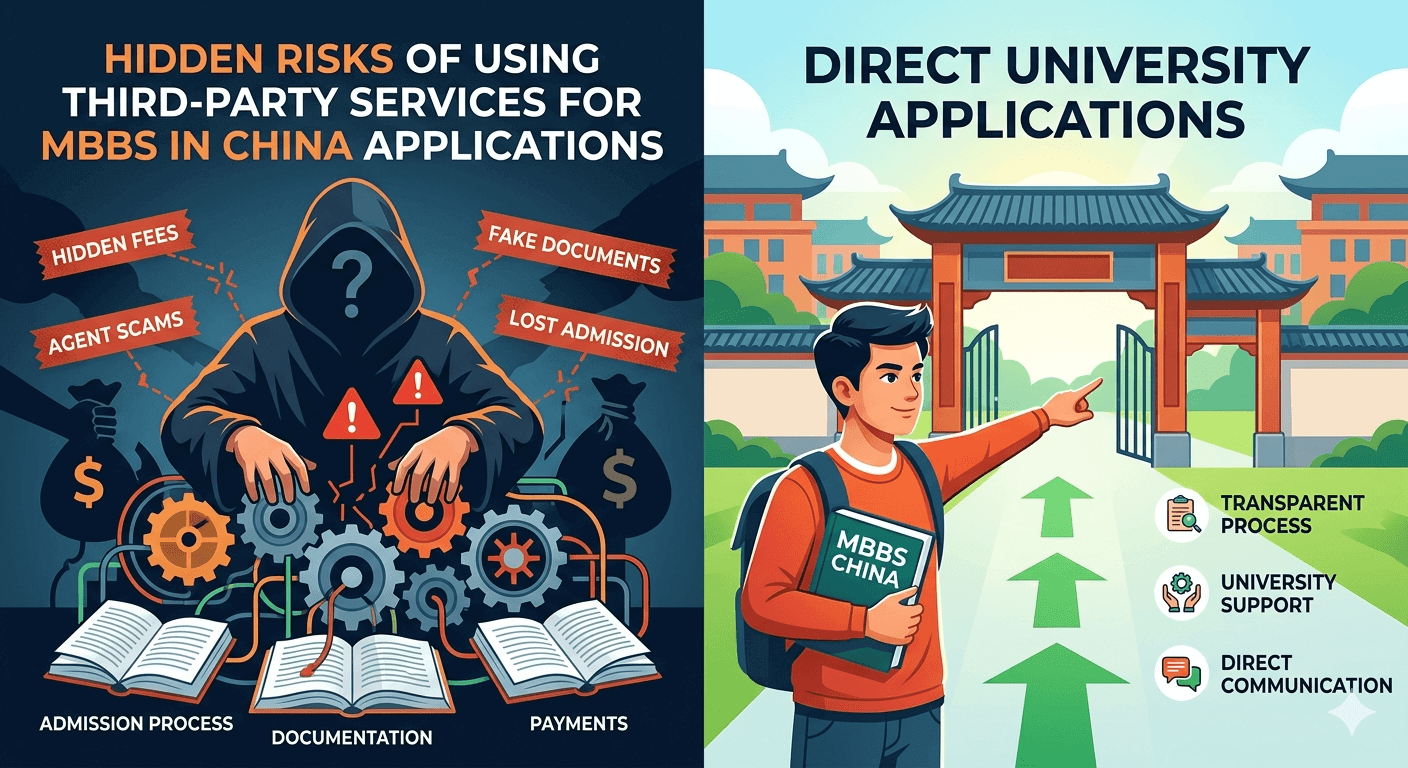
These consultants may seem like they are helping. There are some big problems that students do not think about. These problems can cause students to lose money, get admissions or even damage their career. In this blog we will talk about the dangers of using third-party services for MBBS in China applications. We will also tell students how they can protect themselves when they apply for MBBS in China.
What Are Third-Party Admission Services?
Third-party services are education consultants or agents who help students apply for MBBS programs in China. They usually offer services like:
- University selection
- Document processing
- Visa guidance
- Travel arrangements
In some cases, they act as intermediaries between students and universities. However, this “middleman” role can create serious issues if not handled properly.
1. Lack of Transparency in the Admission Process
One of the problems with using third-party agents is that the admission process is not clear. People do not know what is going on with the Admission Process. The Admission Process is not open and honest. This is an issue because it affects the Admission Process. The Admission Process should be clear so that everyone knows what is happening with the Admission Process.
Many agents do not clearly explain:
- Actual university fees
- Their service charges
- Scholarship details
Research shows that removing middlemen can reduce hidden costs and improve transparency in the admission process .
2. Risk of Fake or Unverified Admissions
Another major problem is fake admission letters. Some agents provide:
- Fake offer letters
- Unrecognized universities
- Incorrect course details
In extreme cases, students reach China only to discover that their admission is not valid. There have been cases where universities refused to accept students who applied through unauthorized agents, forcing them to pay fees again or return home .
3. Misleading Information About Universities
Many consultants promote specific universities just because they earn higher commissions from them. This leads to:
- Poor university selection
- Lack of accreditation
- Limited career opportunities
Some agents may not verify whether the university is approved by relevant medical bodies. This can create serious problems when students try to get their degree recognized in their home country.
4. Financial Fraud and Overcharging
Financial scams are a common issue when dealing with third-party services. Some common fraud practices include:
- Asking for full payment upfront
- Charging extra “processing fees”
- Taking money in personal accounts
Experts warn that upfront payments and unclear fee structures are major red flags when dealing with intermediaries .
In many cases, students lose their money and receive no proper admission in return.
5. Data Privacy and Document Misuse
When applying through consultants, students share sensitive documents such as:
- Passport copies
- Academic certificates
- Medical records
If the consultant is not trustworthy, this information can be misused. Some companies may share data with unknown third parties or fail to protect it properly. This creates risks of identity theft or document fraud.
6. Lack of Direct Communication with Universities
Using a third-party agent often limits direct contact between students and universities. This creates several problems:
- Miscommunication about admission requirements
- Delays in application processing
- Incorrect information being shared
Language barriers already make communication difficult, and relying on intermediaries can increase confusion and mistakes .
7. Legal and Compliance Risks
Sometimes third-party agents use illegal ways to get admissions. This can be a problem. This can include:
- Fake documents
- Bribes or unofficial payments
- Manipulated applications
Studies show that third-party intermediaries are often involved in compliance and corruption risks in international transactions.
When something goes wrong in these transactions students may still face legal consequences even if the students are not directly involved in these international transactions.
8. No Accountability or Support After Admission
Many agents disappear after completing the admission process. Students are left without support for:
- Visa issues
- Hostel arrangements
- University registration
Without proper guidance, students struggle to settle in a new country. A reliable consultant should provide post-arrival support, but many third-party agents fail to do so.
9. Poor Guidance on Documentation and Requirements
Incorrect documentation is another common issue. Some agents:
- Submit incomplete applications
- Provide wrong instructions
- Miss important deadlines
This can result in the visa being rejected. The admission was delayed. It is really important to get guidance and if you make mistakes at this stage it can cost students a whole academic year at the university, which is a big deal, for the students and their visa application process and the students academic plans.
10. Hidden Conflicts of Interest
Many third-party agents work on commission. This means they may prioritize:
- Their profit over student interest
- Universities that pay them more
- Faster admissions instead of better options
Experts highlight that understanding the background, ownership, and incentives of intermediaries is important to avoid such risks .
How to Avoid These Risks
To stay safe you should follow these steps:
Verify the University
Always check if the university is recognized by:
- Pakistan Medical Commission also known as PMC
- World Directory of Medical Schools
Avoid Paying Full Fees to Agents
Pay tuition fees directly to the university whenever possible.
Ask for Official Documents
Request:
- Admission letters
- Fee structure
- University confirmation emails
Research the Consultant
Check:
- Reviews
- Experience
- Office location
Prefer Direct Applications
Applying directly through universities reduces risks and ensures transparency.
Conclusion
When you are applying for MBBS in China using services from companies might look like an easy way out but it can be very bad for you. There are problems that can happen like people taking your money and fake acceptance letters and you do not know what is really going on. These problems can really hurt your future as a student.
You need to be careful and find out all the facts and not just believe what these agents tell you. If you make choices from the start you will not waste time, money and you will not be so stressed out later.
Always remember that your education is something you are putting your money into so you need to be smart about it and take care of it.